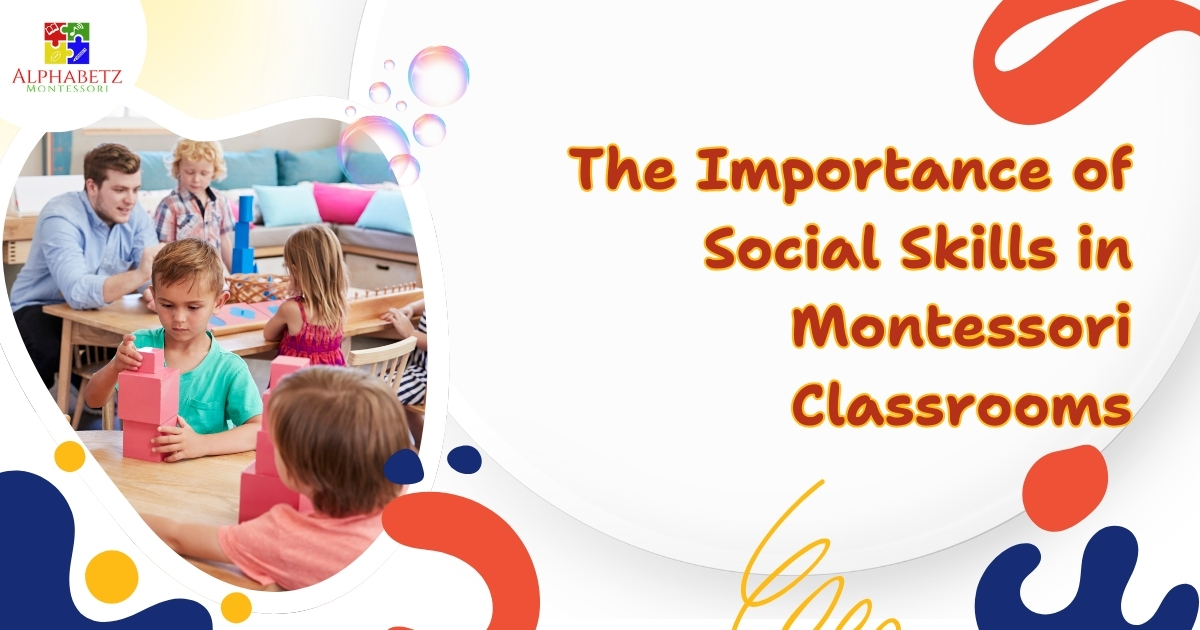
In today’s world, academic knowledge alone is not enough to help children thrive. Social skills such as communication, empathy, cooperation, and respect play a crucial role in shaping a child’s overall development. Montessori education recognizes this early on and intentionally creates an environment where social growth is just as important as academic learning. At Alphabetz Montessori, social skills are nurtured naturally through everyday interactions, collaborative activities, and a thoughtfully prepared classroom environment.
A Community-Based Learning Environment
One of the defining features of Montessori classrooms is the sense of community they create. Unlike traditional classrooms where children are often grouped strictly by age and follow the same activities at the same time, Montessori environments encourage interaction, collaboration, and peer learning. Children work independently or in small groups, allowing them to communicate, share ideas, and learn from one another at their own pace. This structure helps children develop confidence in expressing themselves while also learning to listen to and respect others.
Mixed-Age Classrooms Encourage Cooperation
Montessori classrooms typically include mixed-age groups, often spanning three years. This arrangement plays a powerful role in developing social skills. Younger children observe and learn from older peers, while older children gain leadership experience by guiding and supporting younger classmates. These daily interactions foster patience, empathy, and responsibility. Children naturally learn how to help, collaborate, and resolve conflicts, skills that are essential both inside and outside the classroom.
Learning Respect Through Grace and Courtesy
Grace and courtesy lessons are a cornerstone of Montessori education. These lessons teach children practical social behaviors such as greeting others politely, taking turns, waiting patiently, and resolving disagreements respectfully. Rather than being taught through lectures, these behaviors are modeled by teachers and practiced through real-life situations. Over time, children internalize these social norms, leading to a calm, respectful classroom atmosphere where everyone feels valued.
Independence Builds Social Confidence
Montessori education places a strong emphasis on independence, which directly contributes to social confidence. When children are trusted to choose their work, manage their time, and care for their environment, they develop a strong sense of self-worth. This confidence makes it easier for them to interact positively with peers, communicate their needs, and stand up for themselves respectfully. Independent children are more likely to engage socially without fear or hesitation.
Conflict Resolution and Emotional Intelligence
Disagreements are a natural part of any social setting, and Montessori classrooms treat conflict as a learning opportunity. Teachers guide children to express their feelings, listen to others, and find peaceful solutions. This approach helps children develop emotional intelligence understanding their own emotions and recognizing those of others. By learning to resolve conflicts calmly and respectfully, children gain lifelong skills that support healthy relationships.
Collaborative Work and Shared Responsibility
Many Montessori activities encourage collaboration, whether it’s working together on a project, sharing materials, or caring for the classroom environment. Children learn that their actions affect others and that cooperation leads to positive outcomes. Cleaning up after activities, caring for plants, or preparing snacks together teaches responsibility and teamwork. These shared experiences strengthen social bonds and promote a sense of belonging.
Preparing Children for Life Beyond the Classroom
The social skills developed in Montessori classrooms extend far beyond early childhood. Children who grow up in Montessori environments often demonstrate strong communication skills, empathy, adaptability, and respect for others. These qualities prepare them not only for success in school but also for meaningful relationships and responsible citizenship later in life.
At Alphabetz Montessori, we believe that social development is the foundation of lifelong learning. By nurturing social skills alongside academic growth, we help children become confident, compassionate, and capable individuals ready to thrive in an ever-changing world.
