Independent learning is one of the most valuable skills a child can develop during the early years. It builds confidence, critical thinking, self-discipline, and a lifelong love of learning. Montessori education is uniquely designed to nurture independence by respecting each child’s natural curiosity and ability to learn at their own pace. In a Montessori classroom, independence is not forced it is carefully guided and encouraged every day.
A Child-Centered Learning Environment
Unlike traditional classrooms where instruction is teacher-led, Montessori classrooms are child-centered. This means the learning environment is thoughtfully prepared to allow children to choose activities based on their interests and readiness. Shelves are organized, materials are accessible, and each activity has a clear purpose. Children are free to select their work, complete it independently, and return it to its place. This sense of ownership helps children develop responsibility and confidence in their abilities.
By giving children freedom within clear boundaries, Montessori classrooms encourage decision-making from an early age. Children learn to trust themselves, manage their time, and take pride in their accomplishments.
Hands-On Learning Materials
Montessori materials are designed to be self-correcting and hands-on. Whether it’s learning to pour water, match shapes, or explore math concepts, children learn by doing rather than memorizing. These materials allow children to recognize and correct their own mistakes without constant adult intervention.
This process builds problem-solving skills and perseverance. When children work through challenges independently, they gain a deeper understanding of concepts and develop resilience an essential skill for both academic and life success.
Freedom to Learn at Their Own Pace
Every child develops differently, and Montessori education respects this natural variation. Children are not rushed to keep up with a group or held back if they are ready to advance. Instead, they progress at a pace that feels comfortable and motivating.
This individualized approach reduces frustration and comparison, allowing children to focus on learning rather than competition. As a result, children become more confident learners who are internally motivated rather than dependent on external rewards.
The Role of the Montessori Teacher
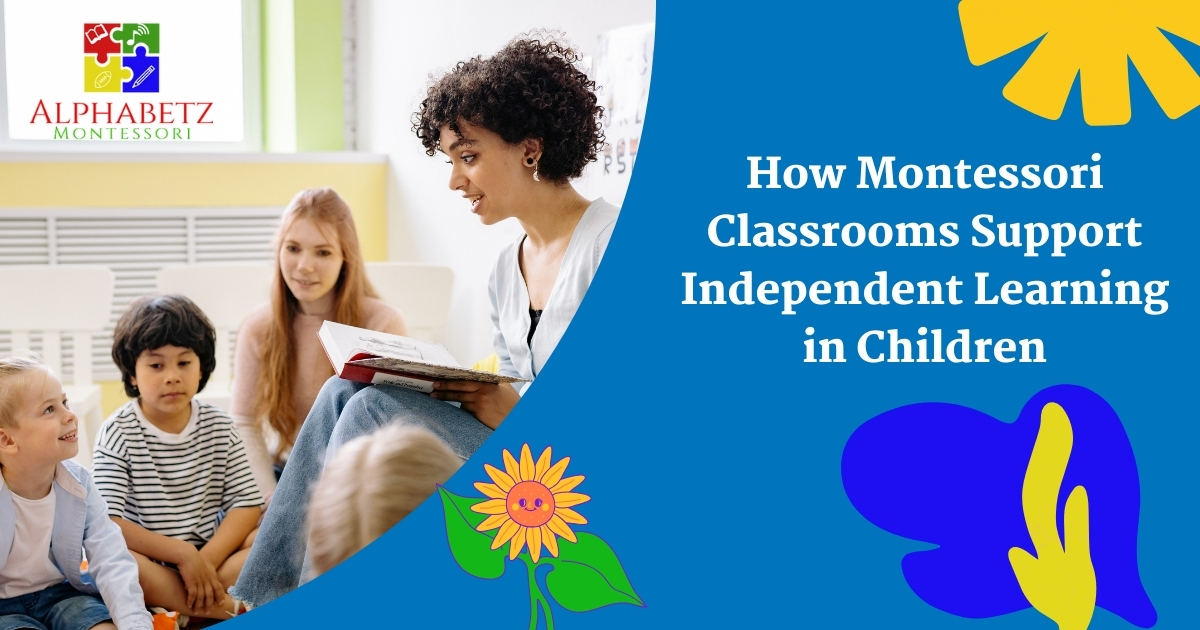
In Montessori classrooms, teachers act as guides rather than lecturers. They observe each child carefully, introduce lessons when the child is ready, and step back to allow independent exploration. This respectful approach empowers children to take charge of their learning while knowing support is available when needed.
By trusting children to explore independently, Montessori teachers foster self-discipline and intrinsic motivation key components of independent learning.
Practical Life Activities Build Real-World Skills
One of the most distinctive aspects of Montessori education is Practical Life activities. These include everyday tasks such as buttoning, pouring, cleaning, food preparation, and caring for plants. While simple, these activities are powerful tools for building independence.
Practical Life work strengthens fine motor skills, concentration, coordination, and self-confidence. Children feel capable and valued when they can take care of themselves and their environment, reinforcing the idea that they are active contributors rather than passive learners.
A Calm, Respectful Classroom Culture
Montessori classrooms are typically calm, orderly, and respectful. Children learn to work independently or collaboratively while respecting others’ space and concentration. This peaceful environment helps children focus deeply on their work, increasing attention span and self-regulation.
Over time, children develop the ability to manage their emotions, make thoughtful choices, and work independently skills that extend far beyond the classroom.
Preparing Children for Lifelong Success
Independent learning is not just about academics; it’s about preparing children for life. Montessori education nurtures confident, capable individuals who enjoy learning, take responsibility for their actions, and adapt to new challenges with confidence.
At Alphabetz Montessori, we believe that independence is the foundation for success. By supporting children’s natural desire to learn and explore, Montessori classrooms empower them to become curious, confident, and independent learners for life.