
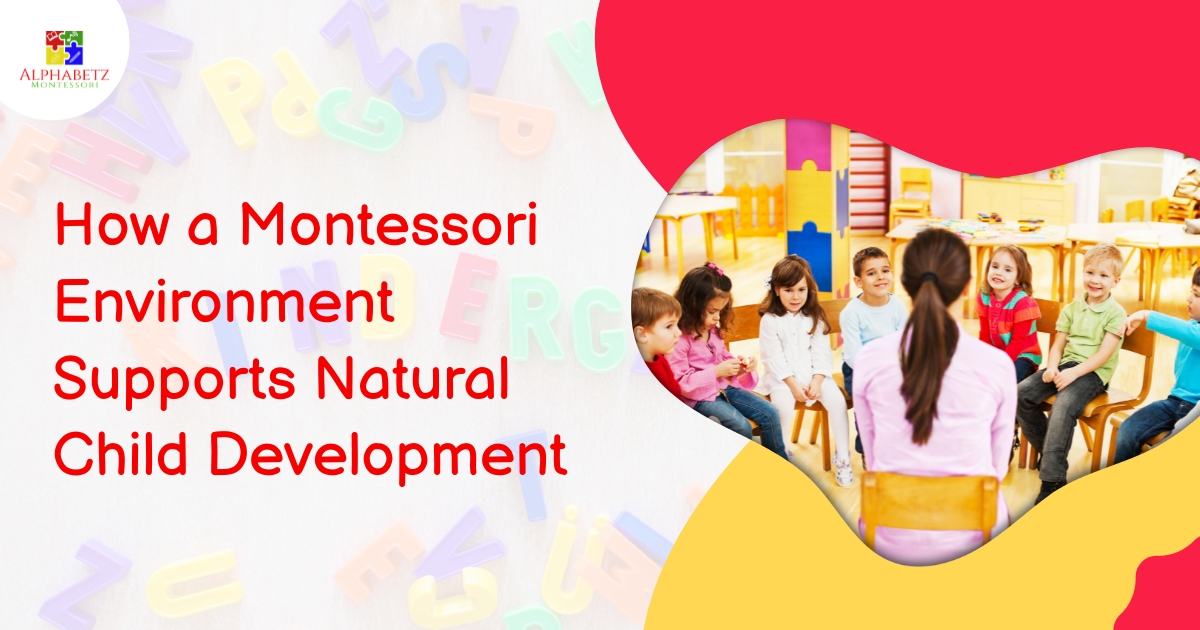
Early childhood is one of the most important stages of human development. During these formative years, children absorb information from their surroundings, build essential skills, and develop their personality. A well-designed learning environment plays a crucial role in shaping this growth. The Montessori approach focuses on creating an environment that supports a child’s natural curiosity, independence, and love for learning.
The Montessori method, developed by Maria Montessori, is based on the belief that children learn best when they are given the freedom to explore, discover, and learn at their own pace. In a Montessori classroom, the environment itself becomes a powerful teacher that guides children toward meaningful learning experiences.
A Child-Centered Learning Space
One of the defining features of a Montessori environment is that it is designed specifically for children. Everything in the classroom from furniture to learning materials is arranged at the child’s level. Shelves are low and accessible, allowing children to choose their own activities independently.
This child-centered setup encourages confidence and decision-making. When children are free to select their work, they naturally engage in activities that match their developmental needs and interests. This sense of ownership over learning helps children become more motivated and enthusiastic learners.
Encouraging Independence and Responsibility
A Montessori environment promotes independence from an early age. Children are encouraged to perform everyday tasks on their own, such as pouring water, cleaning up their workspace, or organizing materials. These simple activities help build practical life skills and a sense of responsibility.
By practicing these tasks regularly, children develop self-confidence and problem-solving abilities. They learn that they are capable individuals who can manage their own actions and environment. This independence forms the foundation for lifelong learning and personal growth.
Hands-On Learning Experiences
In a Montessori classroom, learning happens through hands-on activities rather than passive instruction. Specially designed Montessori materials help children explore concepts such as numbers, language, shapes, and sensory development through direct experience.
For example, children may use counting beads to understand numbers or sandpaper letters to learn the shapes and sounds of the alphabet. These tactile experiences make learning more engaging and memorable. Hands-on materials also allow children to learn through exploration, which strengthens their understanding and critical thinking skills.
Supporting Individual Learning Pace
Every child develops at a different pace, and the Montessori environment respects these individual differences. Instead of following a rigid schedule or forcing children to learn the same thing at the same time, Montessori classrooms allow children to progress according to their own abilities.
Teachers act as guides rather than traditional instructors. They observe each child carefully and introduce activities that match the child’s readiness and interest. This personalized approach ensures that children feel supported rather than pressured, helping them build confidence and a genuine love for learning.
Promoting Focus and Concentration
Another important aspect of the Montessori environment is uninterrupted work time. Children are given long periods to focus on their chosen activities without unnecessary interruptions. This allows them to fully concentrate on their work and develop deeper levels of focus.
Over time, children learn to complete tasks with patience and attention to detail. Strong concentration skills not only support academic success but also help children develop discipline and perseverance.
Building Social and Emotional Skills
Montessori classrooms are typically designed with mixed-age groups, allowing younger children to learn from older peers while older students develop leadership and mentoring skills. This structure encourages cooperation, empathy, and respect for others.
Children learn to work together, share materials, and support one another’s learning. These interactions help them build strong social and emotional skills that are essential for future relationships and teamwork.
Creating a Love for Lifelong Learning
A Montessori environment nurtures curiosity and creativity by allowing children to explore freely and learn through discovery. Instead of focusing solely on grades or competition, the Montessori approach emphasizes personal growth and meaningful learning experiences.
When children feel respected, capable, and supported, they develop confidence in their abilities and a natural desire to learn more about the world around them.
In this way, a Montessori environment does much more than teach academic concepts. It supports the whole child intellectually, emotionally, socially, and physically, helping them grow into confident, independent, and lifelong learners.
