
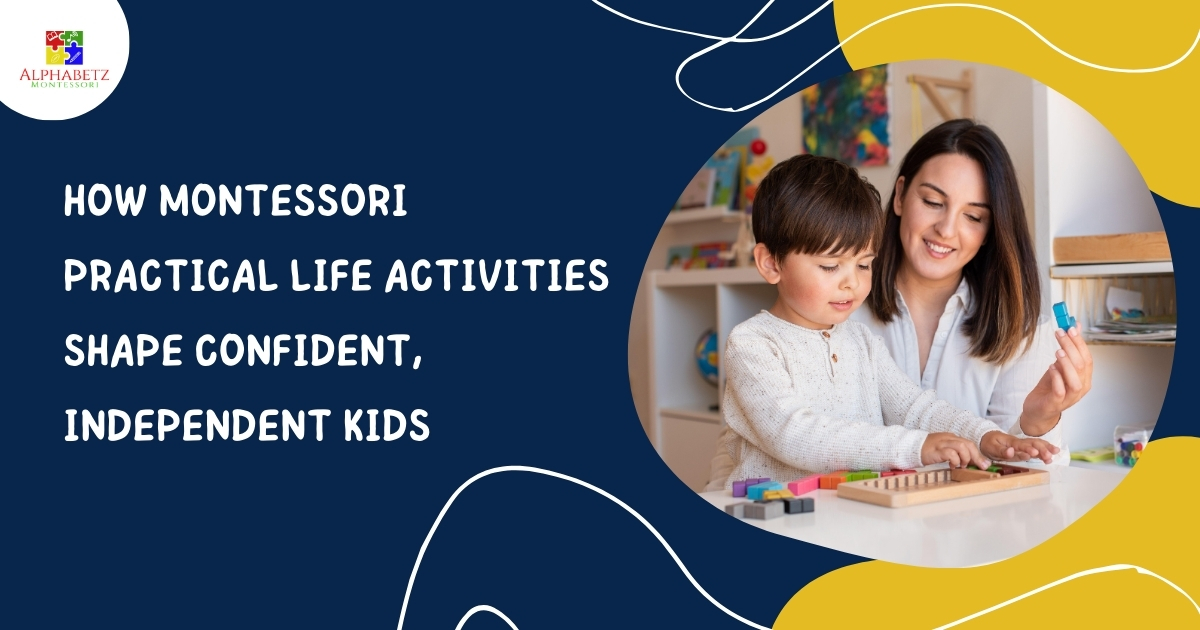
In the early years of childhood, learning is not limited to letters and numbers. True development happens when children learn how to care for themselves, their environment, and others. This is the foundation of practical life activities in the Montessori approach, an essential part of nurturing confident, capable, and independent children.
Developed by Maria Montessori, practical life activities are designed to reflect real-life tasks that children see adults perform every day. These activities may look simple, but they play a powerful role in a child’s overall growth.
What Are Practical Life Activities?
Practical Life activities focus on everyday skills such as pouring, spooning, buttoning, cleaning, food preparation, and caring for plants. These tasks are carefully designed to match a child’s developmental stage, allowing them to practice independence in a safe and supportive environment.
At Alphabetz Montessori, practical life activities are introduced as early as infancy and continue through the preschool years. Each activity has a clear purpose, helping children build focus, coordination, and self-confidence.
Building Independence from an Early Age
One of the most important benefits of practical life activities is independence. When children are given the tools and time to complete tasks on their own, they develop a strong sense of capability. Simple actions like washing hands, putting on shoes, or tidying up their work area teach children that they can care for themselves.
This independence reduces frustration and builds confidence. Children begin to trust their abilities and take pride in their accomplishments, no matter how small the task may seem.
Developing Focus and Concentration
Practical Life activities are designed to engage a child’s full attention. Tasks such as transferring objects or polishing surfaces require careful movements and concentration. Over time, children naturally develop longer attention spans and improved focus.
This ability to concentrate becomes a strong foundation for future academic learning. Children who can focus on practical life tasks are better prepared to engage deeply with reading, writing, and problem-solving activities later on.
Strengthening Motor Skills and Coordination
Many practical life activities involve precise hand movements, which help develop fine motor skills and hand-eye coordination. Pouring water, using tongs, threading beads, or cutting food strengthens the muscles in the hands and fingers.
These skills are essential for writing, drawing, and other academic tasks. At the same time, larger movements such as sweeping or carrying trays support gross motor development and balance.
Encouraging Responsibility and Respect
Practical Life activities also teach children responsibility and respect for their environment. Children learn to clean up after themselves, care for classroom materials, and treat shared spaces with care. This instills a sense of order and respect that extends beyond the classroom.
When children participate in maintaining their environment, they feel valued and included. They understand that their actions matter and that they play an important role in their community.
Boosting Confidence and Emotional Growth
Completing real-life tasks gives children a sense of purpose. Each successful experience builds self-esteem and emotional resilience. Children learn patience, problem-solving, and perseverance as they repeat activities and master new skills.
Rather than relying on constant adult assistance, children gain confidence in making decisions and solving challenges independently.
A Strong Foundation for Lifelong Learning
Practical life activities are more than just preparation for school they prepare children for life. By fostering independence, focus, coordination, and confidence, these activities help children grow into capable, self-assured individuals.
At Alphabetz Montessori, practical life is not an extra activity; it is a vital part of a child’s learning journey. When children are empowered to do things for themselves, they develop skills that support success both inside and outside the classroom.
